
Latest BIM Tools Revolutionizing MEP Engineering in 2024
What is Building Information Modeling? Discover the Latest BIM Tools Revolutionizing MEP Engineering in 2024
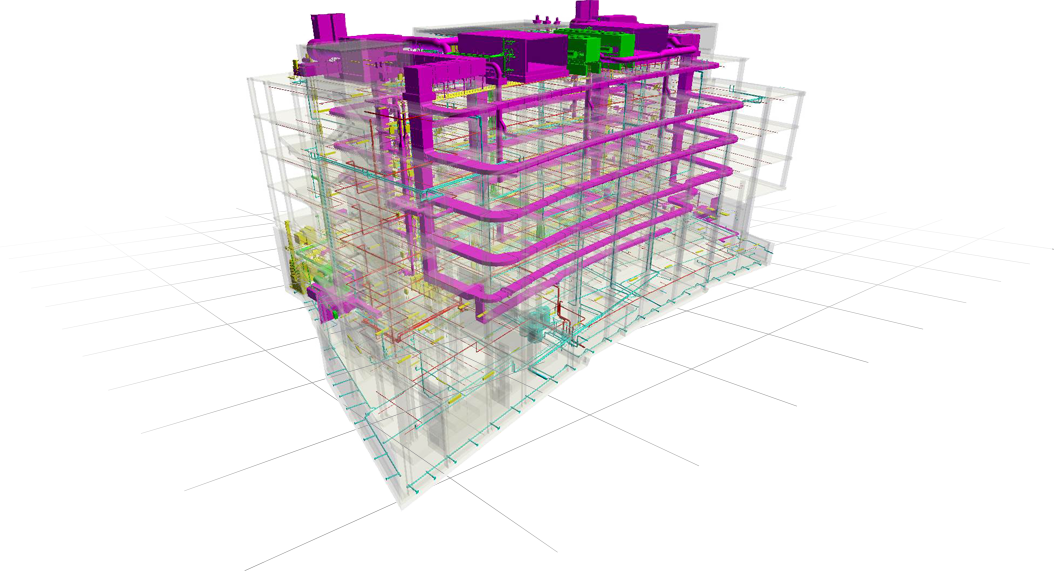
Building Information Modeling (BIM) is indeed a cutting-edge technology that’s revolutionizing the construction industry. Let me provide you with an up-to-date overview of BIM and highlight some of the latest tools as of 2024. This ground-breaking approach to design and construction is transforming how projects are conceived, planned, and executed. BIM’s power lies in its ability to create detailed, data-rich 3D models that serve as a single source of truth for all stakeholders involved in a project. By integrating all aspects of a building’s lifecycle – from initial concept to demolition – BIM offers unprecedented levels of collaboration, efficiency, and cost-effectiveness.
One of the most compelling aspects of BIM is its ability to simulate real-world scenarios before breaking ground. Imagine being able to virtually walk through a building, identify potential clashes between systems, and optimize energy performance – all before a single brick is laid. This level of foresight not only reduces costly errors and rework but also leads to more sustainable and high-performing structures. As we move into 2024, the BIM landscape continues to evolve at a rapid pace.
The latest tools are pushing the boundaries of what’s possible, incorporating artificial intelligence and machine learning to automate complex tasks and provide even deeper insights. For instance, AI-powered BIM software can now predict maintenance needs, optimize space utilization, and even suggest design improvements based on vast databases of historical project data. Moreover, the integration of BIM with other cutting-edge technologies like augmented reality (AR) and the Internet of Things (IoT) is opening up new frontiers in construction management. Picture construction workers using AR headsets to visualize BIM models on-site in real-time, or building systems automatically adjusting based on real-time data fed into the BIM model.
In conclusion, Building Information Modeling (BIM) is not merely a passing trend – it represents the future of construction, revolutionizing the industry in unprecedented ways. By wholeheartedly embracing this ground-breaking technology, companies can secure a substantial competitive advantage, enabling them to deliver projects with remarkable speed, unparalleled efficiency, and superior quality that surpasses traditional methods.
The potential for innovation and improvement through BIM is truly boundless, making it an indispensable tool for any forward-thinking construction professional who aims to stay ahead in this rapidly evolving field. BIM’s collaborative process goes far beyond simple 3D modeling; it encompasses the entire lifecycle of a building, from initial conception to eventual demolition, providing a comprehensive digital representation of both physical and functional characteristics of places.
This holistic approach allows stakeholders to visualize, plan, and execute projects with a level of precision and foresight previously unattainable. By integrating all aspects of design, construction, and maintenance into a single, cohesive digital model, BIM facilitates better decision-making, reduces errors and conflicts, and ultimately leads to more sustainable and cost-effective buildings.
The ability to simulate and analyse various scenarios before breaking ground empowers construction professionals to optimize designs, predict potential issues, and make informed choices that benefit all parties involved. As the construction industry continues to evolve, those who fail to adopt BIM risk being left behind in an increasingly competitive market.
The technology’s capacity to streamline workflows, enhance collaboration, and improve overall project outcomes makes it an essential investment for any company looking to thrive in the modern construction landscape. By harnessing the power of BIM, construction professionals can not only meet but exceed client expectations, delivering projects that are not just built, but meticulously crafted for success from the ground up.
Key aspects of BIM include:
- 3D visualization
- Real-time collaboration
- Clash detection
- Cost estimation
- Project scheduling
- Facility management
As for the latest BIM modeling tools in 2024, while I can’t specify exact versions without verifying current market data, some of the leading platforms likely include an impressive array of cutting-edge software solutions that are revolutionizing the architecture, engineering, and construction industries.
These advanced tools are not merely incremental improvements but represent significant leaps forward in functionality, user experience, and integration capabilities. Autodesk’s Revit, a perennial frontrunner, has likely continued to evolve, offering even more powerful features for creating detailed, information-rich 3D models.
Its comprehensive approach to building design and construction documentation remains unparalleled, making it an indispensable tool for professionals across various disciplines. Bentley Systems’ OpenBuildings Designer, formerly known as AECOsim Building Designer, has undoubtedly made strides in providing a flexible, multi-discipline BIM solution. Its ability to handle large-scale, complex projects with ease has likely been further enhanced, cementing its position as a go-to choice for ambitious architectural and engineering endeavors.
Graphisoft’s ArchiCAD, renowned for its intuitive interface and powerful modeling capabilities, has probably introduced ground-breaking features that streamline workflow and enhance collaboration. Its commitment to innovation in areas such as algorithmic design and cloud-based teamwork continues to attract a loyal user base. Trimble’s Tekla Structures, particularly strong in structural engineering and steel detailing, has likely expanded its reach into other areas of construction modeling. Its reputation for producing highly accurate, constructible models makes it an invaluable asset for projects requiring precision and detailed coordination.
These industry leaders, along with emerging players and specialized tools, are shaping the future of BIM technology. They’re not just improving efficiency; they’re transforming how we conceptualize, design, and construct our built environment.
As you consider which platform might best suit your needs, remember that the most advanced tool is the one that aligns perfectly with your specific project requirements and workflow.
- Autodesk Revit: Known for its comprehensive BIM capabilities.
- Bentley Systems: Offering integrated BIM solutions for infrastructure projects.
- Graphisoft ArchiCAD: Popular for its user-friendly interface and robust features.
- Trimble Connect: Emphasizing cloud-based collaboration and mobile accessibility.
- Nemetschek Allplan: Strong in structural engineering and construction documentation.
These tools are continually evolving, incorporating advanced features like:
– AI-assisted design optimization
– Virtual and Augmented Reality integration
– Enhanced cloud collaboration capabilities
– Improved interoperability with other software
– Sustainability analysis and energy modeling
MEP Global Engineering’s unparalleled expertise in cutting-edge tools across diverse international markets unquestionably delivers substantial value to clients, revolutionizing their construction processes and dramatically enhancing overall project outcomes.
With a proven track record of success spanning continents, MEP Global Engineering stands at the forefront of technological innovation in the construction industry. Their mastery of advanced tools and methodologies enables clients to overcome complex challenges, reduce costly delays, and maximize efficiency at every stage of the project lifecycle. By leveraging MEP’s vast knowledge base and global experience, clients gain a competitive edge, ensuring their projects are completed on time, within budget, and to the highest standards of quality.
The tangible benefits of partnering with MEP Global Engineering extend far beyond immediate project success, fostering long-term growth and sustainability in an increasingly competitive global marketplace.
Would you like more information on any specific aspect of BIM or these tools?
Request Free Quote For BIM Services on info@mepglobalengg.com


Understanding the Basics: Defining BIM and MEP - MEP Global
[…] software provides tools that help MEP engineers to perform simulations and analyses, such as energy analysis and load calculations. This can lead […]