Operations-Ready BIM
Prepare controlled building models around defined facility-information requirements.
Extend BIM beyond construction by organizing building, equipment, asset, location and maintenance-related information for facility teams — supporting operations-ready models, facility records, change control and downstream FM workflows.
Construction completion is not the end of the building information lifecycle.
Equipment is replaced, spaces are modified, systems are upgraded, rooms change use and renovation projects introduce new information.
BIM can support facility operations when the record model, asset data, location information and supporting records are structured for practical lifecycle use.
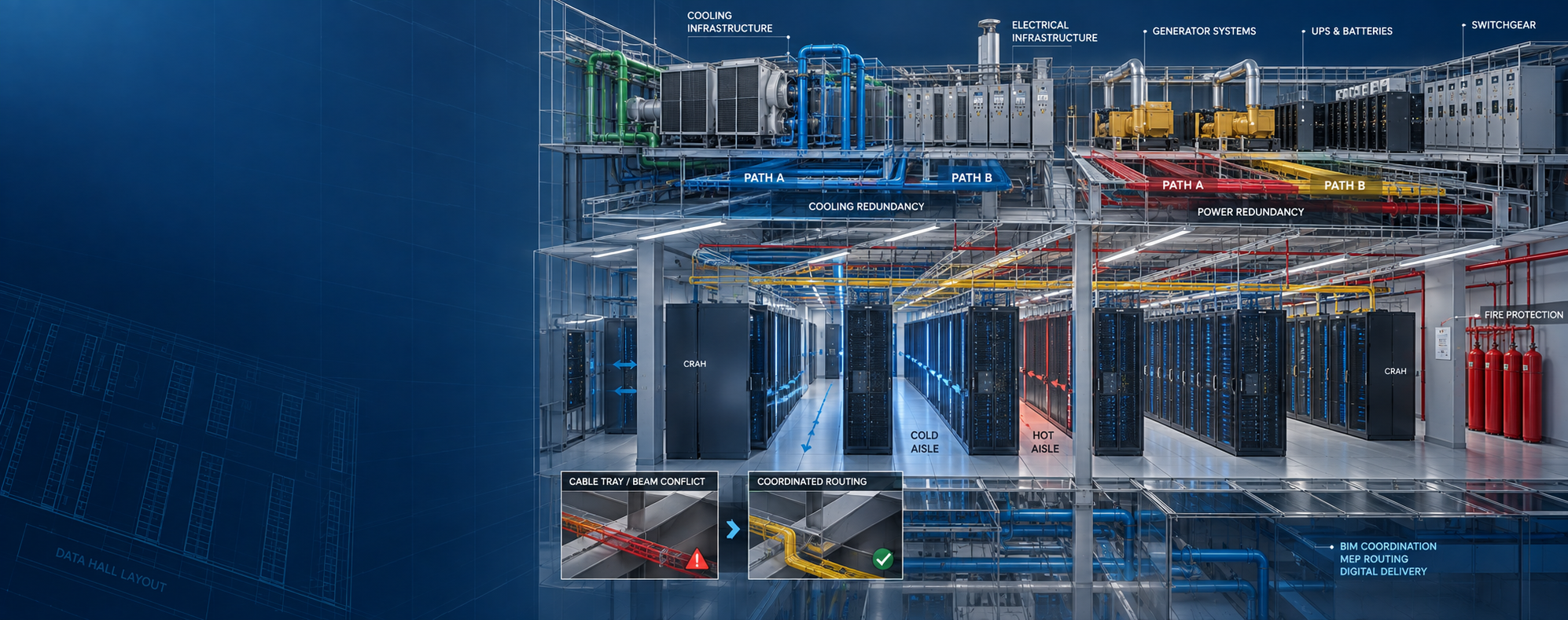
Facility BIM should be structured around actual operational information needs — not simply transferred from construction without review.
Prepare controlled building models around defined facility-information requirements.
Organize selected equipment relative to building, level, room or facility zone.
Connect project-defined asset information with relevant model objects and facility records.
Structure references to supplied operations, maintenance and equipment documentation.
Update digital record models using approved facility-change information.
Support controlled updates after renovation, equipment replacement or operational modifications.
Establish defined ownership, revision and model-update practices.
Structure required BIM and asset information for agreed downstream facility systems.
Review model, asset, location and document information before operational use.
A project may deliver models, PDFs, manuals and equipment schedules without those records being organized around the way facility teams need to use them.
Operational readiness requires a clear relationship between the building, assets, locations, systems and supporting information.
Confirm operational information requirements and intended facility use.
Review BIM, asset data, drawings, manuals and closeout records.
Structure model, equipment, locations and facility information.
Associate required assets with systems, spaces and records.
Review completeness, model alignment, locations and required information.
Prepare agreed information for facility and downstream system use.
A well-prepared operational model can gradually become unreliable when facility changes are not incorporated.
Information governance should define who updates the record, which changes require model revision, what information is controlled and how superseded information is archived.
Facility information should be reviewed for more than model appearance.
QA can assess asset identity, equipment location, system relationships, required parameters, model revision, document references and information completeness.
MEP Global Engineering can support operations-ready BIM, asset information, facility records, approved model updates, information governance and FM-readiness workflows.
Physical maintenance, inspections, repairs, equipment servicing, work-order management, BMS operation, controls programming, safety procedures and facility-management decisions remain with the responsible facility professionals.
CMMS, CAFM, IWMS, ERP, BMS, IoT and other operational platforms remain separate systems with separately defined integration requirements.
BIM can provide a structured digital reference for spaces, systems, equipment, asset locations and related facility information when the model has been prepared for operational use.
Yes. When appropriate location information is structured within the model, selected assets can be associated with buildings, levels, rooms or facility zones.
Yes. Project-supplied O&M manuals, equipment records, submittals, warranty information and other documentation can be referenced within an agreed information-management workflow.
Yes. Approved renovation, replacement and facility-change information can be incorporated into the record model according to the agreed update process.
BIM and asset information can be structured around defined downstream data requirements. Actual platform integration depends on the selected system, supported formats, interfaces and separately defined technical scope.
No. The service focuses on BIM, digital facility information, asset records and information-management support. Physical maintenance, repairs, servicing, inspections and operational decisions remain with responsible facility teams.
Share your as-built models, asset registers, O&M records, facility standards, existing FM information and required operational outputs.